

2026 EQUIPMENT FINANCING TRENDS
What Every Business Needs to Know
An Annual Industry Report by Financial Partners Group | Published March 2026
|
EXECUTIVE SUMMARY The U.S. equipment financing market is entering 2026 with significant momentum. Industry data projects a 6.2% increase in equipment and software investment, with originations across the sector rising approximately 5.9% year over year. For business owners, vendors, and capital planners, this shift creates both opportunity and urgency. Understanding what is driving this growth — and how to navigate the changing financing landscape — is the difference between businesses that move forward and those that fall behind. This report examines the four defining trends shaping equipment financing in 2026: the macro tailwinds fueling investment, the rise of AI-driven underwriting, the accelerating shift toward flexible financing structures, and the sectors growing fastest this year. |
Trend #1: A $1.3 Trillion Market in Full Stride
Let's start with the numbers that matter.
The Equipment Leasing and Finance Association (ELFA) reports that the U.S. equipment finance industry represents approximately $1.3 trillion in annual economic activity. In 2026, that figure is not shrinking — it is growing. Equipment and software investment is projected to climb 6.2% year over year, and new originations across the industry are expected to rise approximately 5.9% year over year.
Why does that matter to you? Because it signals something straightforward: businesses are investing in equipment, and the capital to do so is increasingly available—and increasingly competitive. The question for any business owner, vendor, or capital planner is not whether to participate in this expansion, but how to do it strategically.
The macro forces behind the growth
Several converging conditions are contributing to the projected 2026 surge:
- Deferred investment catching up. Many businesses held back on equipment purchases during the uncertainty of 2023 and 2024. With conditions stabilizing, that pent-up demand is materializing as financed acquisitions.
- Technology-driven replacement cycles. Advances in automation, AI-enabled machinery, and connected equipment are forcing businesses to upgrade faster. Equipment that was considered current three years ago may now be a competitive disadvantage.
- Infrastructure and reshoring momentum. U.S.-based investment in manufacturing, construction, and logistics infrastructure is accelerating, driven in part by domestic supply chain initiatives. These industries are heavy users of commercial equipment financing.
- Preservation of working capital. As interest rate environments have normalized, the value of keeping cash available for operations — rather than deploying it toward capital equipment — has become a clearer strategic priority for finance teams.
- Faster decisions. AI-assisted analysis can evaluate creditworthiness, equipment value, and risk across multiple data inputs at a speed that traditional manual underwriting cannot match. For borrowers, this translates to reduced wait times and clearer answers, sooner.
- Broader credit consideration. AI models can incorporate alternative data signals — such as business performance, cash flow patterns, and industry trends — alongside traditional credit metrics. This opens doors for businesses that might not score perfectly on conventional criteria but have strong underlying fundamentals.
- More accurate risk pricing. Better data means more precise decisions. That can be a real advantage for businesses with strong operational histories, which may have previously been grouped into broader risk categories and priced accordingly.
- Reduced friction in origination. Digital application tools and automated data intake are trimming the administrative burden on both sides of a transaction. For vendors, this matters because it keeps deals moving and reduces drop-off.
- Know your financing capacity before you need it. Understand what your business qualifies for, at what terms, and through which structures. Doing this work before a deal is on the table removes the pressure to make urgent decisions.
- Work with a direct lender who also has depth. FPG is a direct lender with access to 25+ strategic funding partners. That combination — direct decisioning plus broader access — means more options and faster outcomes for your business.
- Match your financing structure to your actual revenue model. If your business has seasonality, growth phases, or project-based revenue cycles, your financing terms should reflect that. A flat monthly payment that ignores cash flow reality is not a solution — it's a constraint.
- Expect real guidance, not just a rate. In a market where technology is accelerating origination, the differentiator between good outcomes and great ones is often the quality of advice and the depth of expertise behind the process. Choose a partner who brings both.
- Are they a direct lender, or do they simply broker to others? Direct decisioning means faster answers, clearer communication, and less friction.
- Do they offer multiple financing structures, or just one? Flexibility in structure is not a luxury — it's a feature that can meaningfully affect your monthly cash position.
- Do they understand your industry? Generic financing is increasingly inadequate. Equipment-specific expertise — including residual value knowledge, industry cash flow cycles, and sector-specific underwriting experience — produces better outcomes.
- Can they scale with you? As your business grows, your financing needs will evolve. A strong financing partner grows with you — not just through your first transaction, but through your next ten.
- Are there real people available when you need them? Technology is a tool. When your deal has nuance — and many do — having an experienced professional available to work through it makes the difference between a closed transaction and a missed opportunity.
For business owners, the takeaway is this: the market is moving. Businesses that plan their capital access now — rather than scrambling reactively — will be better positioned to acquire the equipment they need on terms that work for their operations.
Trend #2: AI and Data Are Changing the Underwriting Game
If you applied for equipment financing five years ago and were frustrated by slow decisions, excessive paperwork, or a process that felt like it wasn't built for your type of business, things are changing.
AI-powered underwriting tools and expanded data analytics are fundamentally reshaping how financing decisions get made. This isn't just a back-office efficiency story. It has real implications for borrowers and vendors on the front end of every transaction.
What AI-driven underwriting means in practice
The human element still matters
Here is the part that often gets left out of the AI conversation: technology improves the process, but it doesn't replace judgment. For complex transactions — equipment with unique residual value characteristics, non-standard business structures, or deals that require creative financing structures — experienced humans still make the difference.
At FPG, we use modern tools to move quickly and reduce unnecessary friction. But we also have real people — experienced financing professionals who understand your industry and your situation — engaged throughout the process. Real people. Real expertise. Real growth.
The risk of a purely automated financing experience is that it can fail exactly when you need it most — when your deal is anything but standard. Choosing a financing partner with both strong technology and real expertise is increasingly important in 2026.
Trend #3: Flexible Structures Are Replacing One-Size-Fits-All
One of the most consequential shifts in equipment financing over the past several years — and one that is accelerating in 2026 — is the move away from standardized, cookie-cutter financing terms toward structures that better match how a business actually operates.
For too long, small and mid-sized businesses were forced to adapt their cash flow and growth plans around the terms their financing provider offered. That model is being replaced. The businesses gaining the most from equipment financing today are those working with partners who can structure payments, end-of-term options, and timelines that align with real operational realities.
Flexible structures in practice
|
Structure |
Best Suited For |
|
Seasonal Financing |
Businesses with seasonal revenue patterns — higher monthly payments during peak periods, lower payments during slower months. Ideal for agriculture, landscaping, hospitality, and retail. |
|
Deferred Payment Plans |
Businesses that need equipment immediately but require time before payments begin — defer start of payments for up to 90 days to align with revenue ramp or project timelines. |
|
Fair Market Value Terms |
Businesses concerned about technology obsolescence — lower monthly payments with the option to upgrade, extend, return, or purchase at the end of the term. |
|
$1.00 Buyout Terms |
Businesses with the intent to own the equipment outright at the end of the term — a predictable full-ownership path with fixed monthly payments. |
Flexible financing structures matter because business cash flow doesn't behave like a flat line. Businesses with predictable seasonality, growth curves, or project-based revenue cycles should not be shoehorned into a fixed monthly payment that was designed for a different type of business entirely.
We don't just finance transactions — we fund possibilities. That means building structures that work with how your business generates revenue, not against it.
In 2026, the financing partners gaining market share are those who lead with flexibility. If your current financing provider is offering one structure and calling it a solution, that may be worth examining more closely.
Trend #4: Which Sectors Are Growing Fastest — And What It Means for Capital Planning
Not all equipment investment is growing at the same rate. Understanding which sectors are experiencing the sharpest expansion can help business owners and vendors plan equipment acquisitions and help financing teams proactively structure capital availability.
Healthcare & Medical Equipment
Healthcare remains one of the strongest and most consistent drivers of equipment financing volume. Diagnostic imaging systems, surgical and procedural equipment, dental technology, and rehabilitation devices all require significant upfront capital — and healthcare providers increasingly prefer financing structures that preserve liquidity for staffing and operational costs.
FPG has financed more than 8,000 transactions and funded over $1 billion in medical equipment — a track record that reflects not just transaction volume, but deep familiarity with how healthcare practices, surgery centers, and medical distributors operate.
Construction & Heavy Equipment
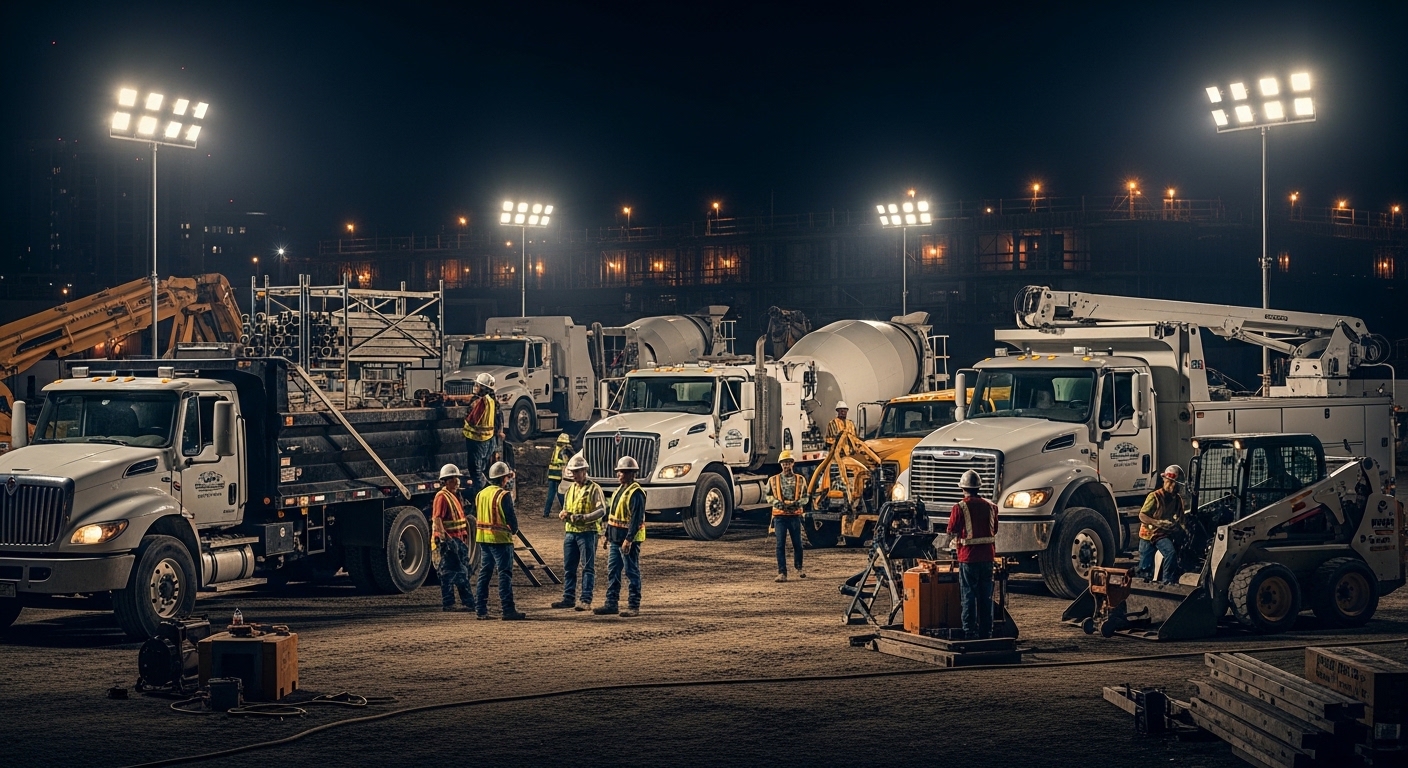
Infrastructure spending, residential development activity, and commercial construction backlogs are all contributing to strong equipment demand in this sector. Excavators, cranes, concrete equipment, and site prep machinery are in high demand, and financing terms that align with project timelines — rather than arbitrary calendar cycles — are increasingly important.
For construction companies, deferred payment structures and step-up terms are particularly relevant as project mobilization phases often precede meaningful revenue by weeks or months.
Manufacturing & Industrial Equipment
The domestic manufacturing sector is experiencing a resurgence. Reshoring of production capacity, automation-driven line upgrades, and the integration of additive manufacturing — including 3D printing and advanced fabrication equipment — are driving significant capital equipment investment.
Manufacturers often need financing structures that account for machinery installation, commissioning time, and production ramp periods. Having a financing partner who understands the economics of a manufacturing floor — not just a credit score — makes a meaningful difference in deal quality.
Transportation & Logistics
Commercial vehicle and fleet financing demand remains strong, with trucking companies, last-mile delivery operations, and regional logistics providers all actively replacing aging assets. Fleet expansion and technology-enabled vehicle upgrades — including EV transitions and telematics integration — are driving new financing volume in this sector.
What this means for capital planning
The sector data points to a straightforward conclusion: the businesses that will grow fastest in 2026 are those that have their equipment capital access lined up before they need it — not scrambling to secure financing after a contract win, a competitor move, or an unexpected equipment failure.
If your sector is on this list, this is a good moment to evaluate your current equipment financing relationships and ask whether they are structured to move at the speed your business requires.
What All of This Means for Your Business in 2026
The four trends above are not independent of each other. They interact. A growing market means more competition for the best financing terms. AI-driven underwriting means decisions happen faster, which rewards businesses that are prepared. Flexible structures mean the right deal is achievable — if you're working with the right partner. And in high-growth sectors, delayed decisions can translate directly into lost revenue or market position.
Here is what being prepared looks like in practical terms:
|
FPG: HERE TO HELP YOU GROW More than capital. A true partnership. Financial Partners Group is a direct lender with access to 25+ strategic funding partners. We work across healthcare, construction, manufacturing, transportation, and more — with financing structures designed to fit how your business actually works. Our team brings real expertise to every transaction. We move fast without cutting corners, bring flexibility to every structure, and stay with you from application through end-of-term. Real people. Real expertise. Real growth. |
How to Choose a Financing Partner in a Changing Market
With originations growing and competition for deals increasing, the quality of your financing partner matters more than ever. Not every financing relationship is created equal. As you evaluate your options for 2026, here are the questions worth asking:
The Bottom Line: 2026 Rewards Those Who Move with a Plan
The equipment financing market in 2026 is defined by growth, speed, and increasing sophistication. Businesses that understand the macro trends, leverage flexible financing structures, and partner with knowledgeable, responsive financing professionals will have a meaningful advantage over those who don't.
The $1.3 trillion U.S. equipment finance industry is not slowing down. Neither should your growth.
Whether you are a business owner evaluating your next equipment acquisition, a vendor looking to help more customers say yes, or a financial professional planning capital deployment, FPG is built to be more than a financing provider. We are a strategic partner, here to help you grow.
|
Ready to Put Your Equipment Plan in Motion? Talk to an FPG financing professional today. No obligation. No jargon. Just a straightforward conversation about how to get your business the equipment it needs, on terms that make sense. Call us: (603) 696-7076 Visit us: www.financialpc.com Financial Partners Group | Here to Help You Grow |
About Financial Partners Group
Financial Partners Group (FPG) is a privately held commercial equipment financing company and direct lender with access to 25+ strategic funding partners. FPG provides flexible financing structures across healthcare, construction, manufacturing, transportation, and a broad range of commercial equipment categories. FPG is headquartered in the United States and serves businesses and vendor partners nationwide.
Industry statistics cited in this report are sourced from the Equipment Leasing and Finance Association (ELFA) 2026 industry outlook data. FPG does not guarantee specific rates, approval timelines, or business outcomes. Financing availability is subject to credit approval and applicable terms.

Your email address will not be published. Required fields are marked *


Leave a Reply