

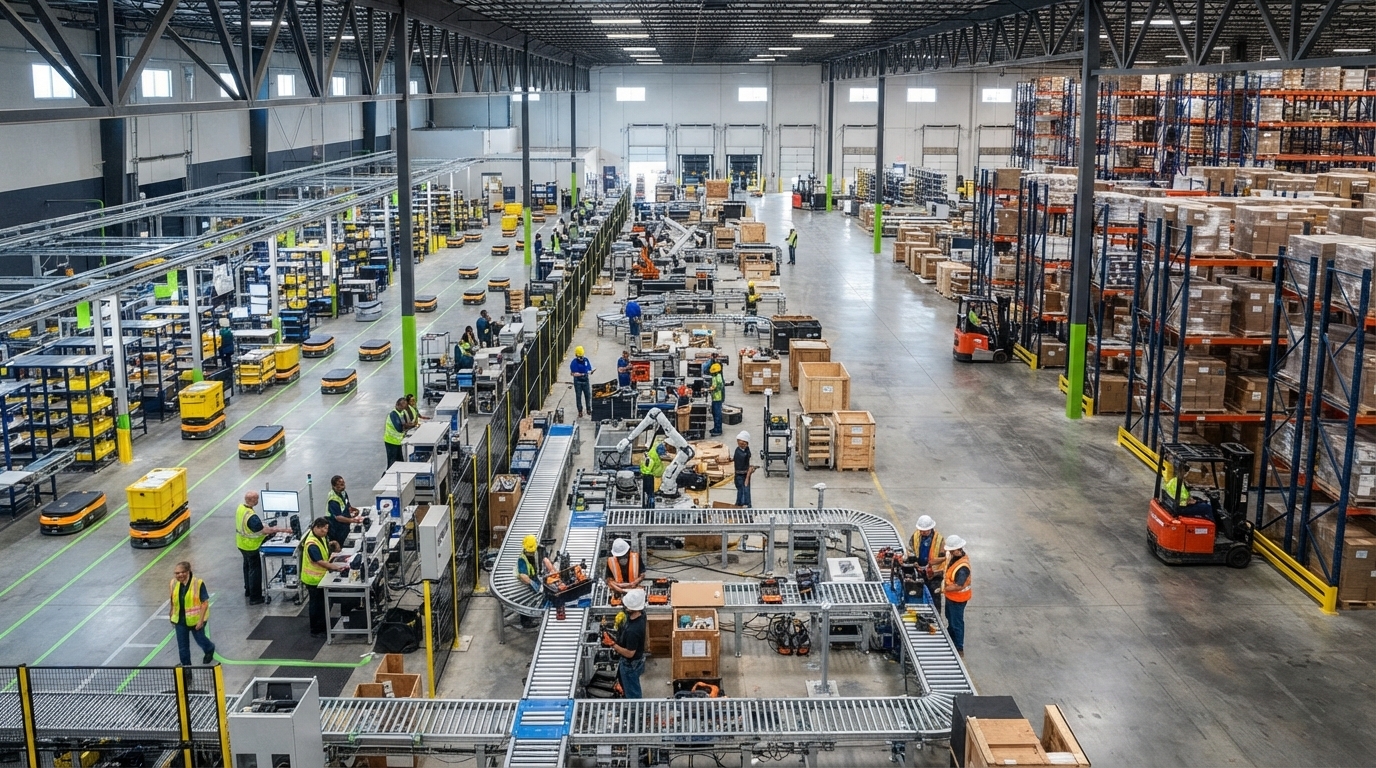
Walk into a fulfillment center built in the last two years and the story is the same: autonomous mobile robots gliding between pick stations, automated storage and retrieval systems stacking inventory sixty feet in the air, conveyor networks smart enough to reroute themselves around a jam. The technology has moved fast. The way most of it gets paid for hasn't kept pace.
Why Warehouse Operators Are Moving Now
Order volumes keep climbing while the labor pool that used to absorb them keeps shrinking. Warehouse turnover remains high, seasonal staffing is harder to lock in every year, and a single AMR deployment now looks less like an experiment and more like the only realistic way to hit next peak season's volume without doubling headcount.
The technology itself has also matured to the point where it's a less speculative purchase. AMRs no longer require ripping up the floor for guide wires. AS/RS units integrate with existing warehouse-management platforms instead of demanding a full software replacement. Conveyor systems increasingly ship with sensors that flag a bearing wearing out before it causes a shutdown. That maturity is what's pulling automation out of the someday pile and into this year's capital plan.
It's also changing the sales conversation. Vendors who sold a buyer their first AMR deployment two years ago are increasingly hearing from that same buyer about extending automation to putaway or replenishment. The question has shifted from whether to automate to what's next — which is a very different, and generally easier, conversation to finance.
Where the Deal Actually Stalls
These projects rarely die because a buyer doesn't see the value. They stall in the budget review, when someone on the finance side asks how a six- or seven-figure system gets paid for without freezing cash the operation needs for payroll, inventory, and the next slow season. A multi-system automation project often carries a price tag an order of magnitude larger than the individual equipment purchases a buyer is used to approving, and that jump in scale is what triggers a longer, more cautious review.
There's also a timing mismatch working against the deal. Automation ROI tends to show up over eighteen to thirty-six months as labor costs come down and throughput climbs, but a lump-sum payment is typically due on delivery. A buyer weighing a multi-year payback period against an immediate cash outlay is going to hesitate, even when the underlying math clearly favors the investment.

Structuring a Deal Around How the Project Actually Rolls Out
Multi-system automation projects — robots, conveyors, integration labor, warehouse-management software — rarely arrive and go live in a single day. Financing warehousing equpment can be structured around that reality instead of against it: progress or milestone-based funding that tracks a phased implementation, with the full system combined into one predictable monthly payment once it's live, rather than one payment due at delivery regardless of how the rollout is actually staged.
As a direct lender with access to 25+ strategic funding partners, FPG can match a project's size and a buyer's credit profile to the structure that actually fits, instead of forcing every automation deal into the underwriting box a single bank would use. Credit decisions typically come back in 2–4 hours — which matters more than it sounds, because warehouse automation purchases are increasingly decided through a competitive procurement process, and a vendor who can hand a buyer financing terms as part of the RFP response has an edge a competitor scrambling to follow up later doesn't.
A Playbook for Selling the System, Not the SKU
-
Quote financing at the proposal stage. Buyers comparing automation vendors are also comparing total cost of ownership — a monthly payment figure changes that comparison in your favor before a competitor gets the chance to counter on price alone.
-
Structure the project in phases when the facility allows it. Financing one zone now, with terms built to accommodate a second phase later, lowers the initial approval bar and gives your champion inside the company an easier internal case to make.
-
Bundle WMS software licensing and integration labor into the same financed amount as the hardware. A buyer managing three separate invoices for one project is more likely to slow-walk the smallest of the three, which can hold up the entire go-live.
-
Bring financing terms into competitive RFP responses, not just direct sales conversations. Procurement teams increasingly ask for financing options as part of the bid package, and a vendor without an answer ready is sometimes eliminated before the technical evaluation even starts.
-
Offer purchase options and end-of-term options up front. Buyers weighing robotics investments know today's AMR may be dated in five years, and a clear path to upgrade removes a real, specific objection rather than a vague one.
-
Raise Section 179 as a potential benefit for equipment placed in service this year — framed clearly as something the buyer's tax advisor needs to confirm, not a guarantee — since it can be the detail that moves a fence-sitting buyer to close before year-end.
What a Phased Rollout Looks Like in Practice
Picture a regional distribution operator that wants to automate picking in one zone before committing to a full-facility AS/RS buildout. Financing built around that plan can fund the first phase now, with terms structured to anticipate a likely second-phase expansion — so when the buyer is ready to scale, they're not starting a brand-new approval from zero. That kind of structure turns a single automation sale into an ongoing account relationship instead of a one-time transaction, which is usually a better outcome for the vendor than the buyer ever realizes at the time.
Frequently Asked Questions
Can financing be structured around a phased or multi-site rollout instead of one lump payment?
Yes. Financing can be built around a project's delivery and go-live sequence, including milestone or progress-based funding for systems with long lead times, and can account for a planned future phase so a second-phase expansion isn't starting from scratch.
How fast can a buyer get a credit decision, especially during a competitive procurement process?
Most credit decisions come back in 2–4 hours, which is often fast enough to include financing terms directly in an RFP response rather than following up after the buyer has already narrowed the field.
Does financing cover integration labor and WMS software, or only the physical hardware?
Integration, installation, and software licensing can typically be combined with the equipment into a single financed amount, so the buyer manages one payment instead of separate invoices for each piece of the project.
What if the buyer's credit profile doesn't fit a typical bank's underwriting box?
As a direct lender with access to 25+ strategic funding partners, FPG can often structure terms for buyers — including newer or fast-growing operations — that a single-source lender would decline outright.
What happens when the technology needs to be refreshed in a few years?
End-of-term options are laid out clearly at the start of the agreement, giving buyers a defined path to upgrade, extend, or purchase the equipment outright as automation technology continues to evolve.
Ready to Help Your Buyers Move Forward?
FPG is more than an equipment financing company — we're a true sales partner. As a direct lender with access to 25+ strategic funding partners, we help vendors close more deals with fast, flexible structures and real people guiding every step. Learn more about our vendor programs that help you sell more and grow.
Here to help you grow.
📞 (603) 696-7076 | 🌐 www.financialpc.com
Your email address will not be published. Required fields are marked *



Leave a Reply