

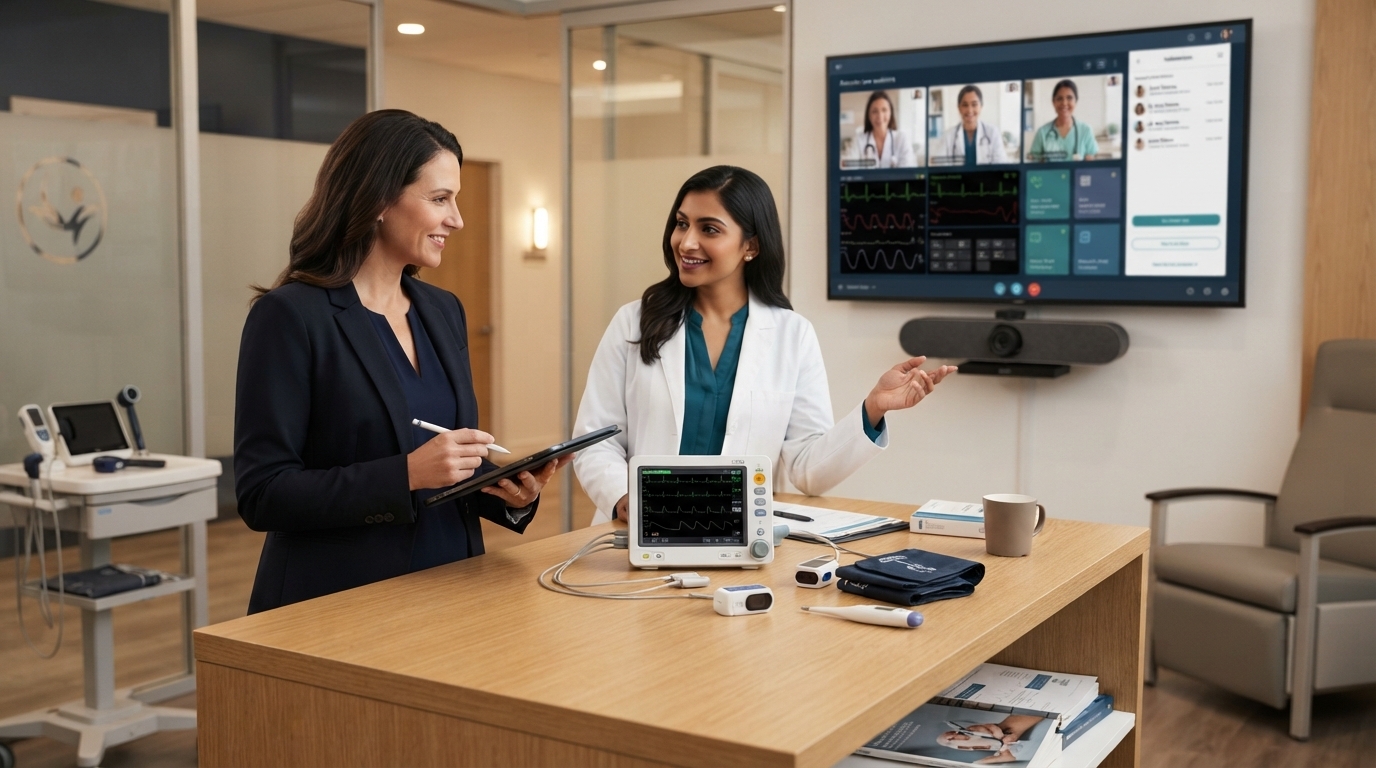
Every clinic wants to offer hybrid care. Fewer clinics have a clean way to pay for the high-resolution cameras, ECG monitors, and secure communication platforms that make it actually work — especially when the return shows up over months of reduced no-shows and expanded patient volume, not on the day the equipment arrives.
The ROI Is Real, But It Doesn't Show Up on Day One
Telehealth and remote-monitoring equipment pays for itself through fewer missed appointments, broader geographic reach, and better chronic-care management between visits. None of that shows up on the balance sheet the week the equipment arrives, which makes a large upfront cost hard for a practice owner to justify against this month's cash flow, even when they're fully convinced of the long-term case.
There's also a credibility gap vendors have to close. Clinics have heard telehealth pitches for years, and many tried a stripped-down version during 2020 that didn't stick once in-person visits resumed. The equipment being sold now — better cameras, integrated remote monitoring, platforms built for clinical workflows rather than consumer video calls — is a different proposition, but the buyer's skepticism from that earlier round often has to be addressed before the financing conversation even starts.
Spreading the Cost to Match the Return
FPG financing turns a telehealth buildout — cameras, monitors, and platform hardware — into one predictable monthly payment that a clinic can weigh against its expected patient-volume gains, rather than a lump sum it has to justify before seeing a single new visit. As a direct lender with access to 25+ strategic funding partners, terms can be shaped around a practice's size and cash position, with credit decisions typically returned in 2–4 hours.
Section 179 is also worth raising as a potential benefit for practices purchasing and placing this equipment in service — buyers should confirm specifics with their tax advisor, but for a practice weighing whether to commit this fiscal year, it's a detail that can move the timeline up.
Selling the Hybrid-Care Buildout, Not Just a Device
-
Bundle hardware, secure communication software licensing, and setup into one financed package rather than pricing the camera separately from the platform it depends on.
-
Frame the monthly payment against realistic gains in patient volume or reduced no-shows, without citing specific outcome numbers for the buyer's practice — the general case is credible; invented precision isn't.
-
Offer scalable structures for practices piloting telehealth in one department before expanding, since a lot of buyers who tried an earlier, thinner version of telehealth want to start small and prove it out again.
-
Address the 2020-era skepticism directly if it comes up — acknowledge that a lot of practices tried something rushed back then, and explain specifically what's different about a clinical-grade setup versus a consumer video-call workaround.
-
Discuss purchase options and end-of-term options given how quickly remote-care technology evolves.
Where the Conversation Usually Needs to Start
For a lot of practices, the real objection isn't the payment — it's confidence that this attempt at telehealth will actually get used by patients and staff, unlike whatever was cobbled together a few years ago. A vendor who leads with the financing structure before establishing that the equipment itself solves the earlier problem is often solving for the wrong objection first.
Frequently Asked Questions
Can financing cover software platform costs along with the hardware?
Yes, telehealth platform and communication software costs can typically be included in the same financed amount as the equipment, rather than billed separately.
How quickly can a clinic get a credit decision?
Most credit decisions come back in 2–4 hours.
Is there a tax advantage to purchasing telehealth equipment?
Section 179 may offer a potential benefit — this depends on the buyer's specific situation, so a tax advisor should confirm the details before it factors into the purchase timeline.
Can a smaller or newer practice qualify?
As a direct lender with access to 25+ strategic funding partners, FPG can often shape terms to fit a range of practice sizes and credit profiles, not just established multi-location groups.
What if the clinic wants to expand the program later?
Financing can be structured to support a phased rollout, so a practice can start with one department or use case and scale as the program proves out.
Ready to Help Your Buyers Move Forward?
FPG is more than an equipment financing company — we're a true sales partner. As a direct lender with access to 25+ strategic funding partners, we help vendors close more deals with fast, flexible structures and real people guiding every step. Learn more about our vendor financing programs.
Here to help you grow.
📞 (603) 696-7076 | 🌐 www.financialpc.com
Your email address will not be published. Required fields are marked *


Leave a Reply