

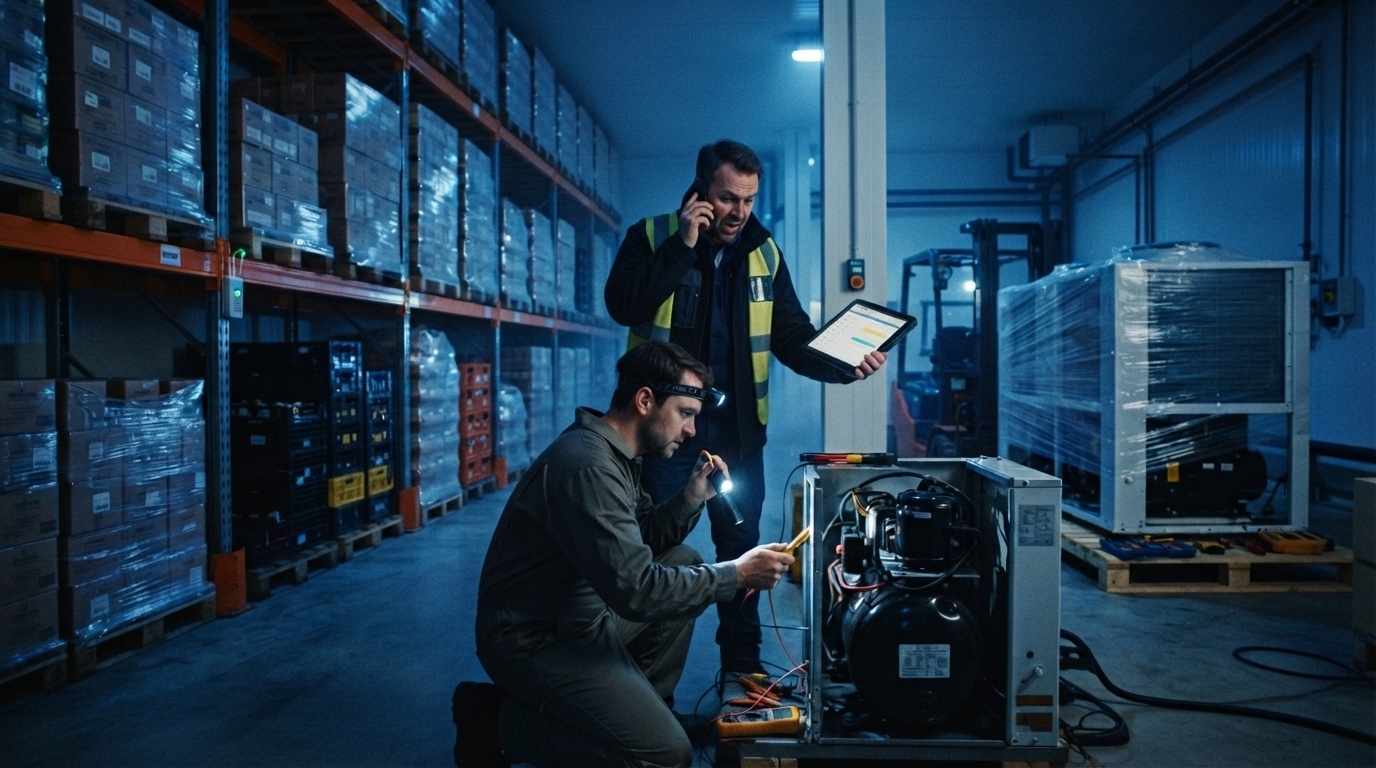
Cold-chain purchases usually aren't optional. A failed compressor at 11 p.m., a new food-safety requirement from a retail partner, a growth spurt that outpaces existing cold storage — your buyer needs the equipment now, not whenever next quarter's budget opens up. That urgency should be an advantage for the vendors who can move fast. Too often, it isn't, because the financing process is built for a slower kind of purchase.
Urgency Meets a Process That Wasn't Built for It
Most equipment financing is designed around planned capital purchases — a buyer researches, compares, and budgets months in advance. Cold-chain purchases frequently don't work that way. A compressor failure doesn't wait for the next budget cycle, and neither does a new inspection requirement from a retailer or regulator with a hard compliance date attached. The gap between how fast a cold-chain need becomes urgent and how slowly a traditional approval process moves is exactly where deals get lost to whichever vendor — or whichever competitor's financing partner — can move faster.
It's worth understanding what's actually driving these purchases, because it shapes how to sell into them. Some are pure emergency replacements. Others are proactive: a producer expanding into a new product line that requires blast chilling, or a distributor adding refrigerated trailers to serve a new region. The emergency deals need speed above everything else. The proactive ones are often more receptive to a broader conversation about upgrading to more energy-efficient equipment while they're at it.
Financing That Moves as Fast as the Need
FPG structures financing for blast chillers, refrigerated tanks, cold rooms, and refrigerated trailers as a predictable monthly payment, with credit decisions typically returned in 2–4 hours. As a direct lender with access to 25+ strategic funding partners, terms can be shaped to a buyer's situation — including operations replacing failed equipment under real time pressure, where a slow approval isn't just inconvenient, it's a food-safety risk while the old unit stays offline.
Energy-efficient refrigeration upgrades also carry a potential Section 179 benefit worth raising with your buyer's tax advisor, which can help make a compliance-driven purchase easier to justify internally — especially for a buyer who wasn't planning to spend this quarter but now has to.
Selling Cold-Chain Equipment as a Compliance Solution, Not Just Hardware
-
Lead with the compliance and food-safety angle — it's often the real driver behind the purchase, not just capacity, and framing the conversation that way tends to resonate more than a straight equipment pitch.
-
Offer financing as a way to replace failing equipment immediately rather than waiting for a full budget cycle; for an emergency replacement, the speed of the decision matters as much as the terms themselves.
-
Bundle installation and any necessary facility modifications — electrical upgrades, insulation work — into the financed amount so the buyer isn't managing a second, separate capital request for work the equipment itself requires.
-
For proactive (non-emergency) buyers, use the conversation as an opening to discuss energy-efficient options and the Section 179 angle, since these buyers have more room to consider the full picture than someone reacting to a failure.
-
Discuss end-of-term options up front for buyers who expect refrigeration technology, particularly around energy efficiency and monitoring, to keep improving.
Two Different Buyers, Two Different Conversations
A producer with a compressor down tonight needs a fast answer and a fast install — the financing conversation should be short and focused entirely on speed. A producer planning next year's expansion into a new cold-chain-dependent product line has room for a more thorough conversation about efficiency, capacity planning, and how the equipment fits their growth. Treating both buyers the same way — either rushing the planner or over-explaining to the emergency buyer — tends to cost vendors deals they should have closed easily.
Frequently Asked Questions
Can financing move fast enough for an emergency equipment failure?
Credit decisions typically come back in 2–4 hours, which helps when a buyer is dealing with a failed unit and can't wait weeks for approval while product sits at risk.
Does financing cover installation and facility modifications, not just the unit itself?
Yes, those costs can typically be included in the financed amount alongside the equipment, so the buyer isn't managing a separate request for electrical or facility work.
Is there a tax benefit tied to energy-efficient refrigeration?
Section 179 may apply as a potential benefit — buyers should confirm the details with their own tax advisor, since eligibility depends on their specific situation.
Can financing cover a refrigerated trailer as well as fixed cold storage?
Yes, both mobile and fixed cold-chain equipment can typically be financed under the same structure, which is useful for distributors expanding delivery capacity alongside storage.
What if our buyer needs multiple pieces of cold-chain equipment across two locations?
Multi-location and multi-unit purchases can generally be combined into a single financing structure — worth walking through the specifics with your FPG contact rather than assuming it needs to be split into separate deals.
Ready to Help Your Buyers Move Forward?
FPG is more than an equipment financing company — we're a true sales partner. As a direct lender with access to 25+ strategic funding partners, we help vendors close more deals with fast, flexible structures and real people guiding every step. Learn about our food and beverage equipment financing vendor programs.
Here to help you grow.
📞 (603) 696-7076 | 🌐 www.financialpc.com
Your email address will not be published. Required fields are marked *
%20(1).png?width=352&name=Image_fx%20(4)%20(1).png)
Leave a Reply